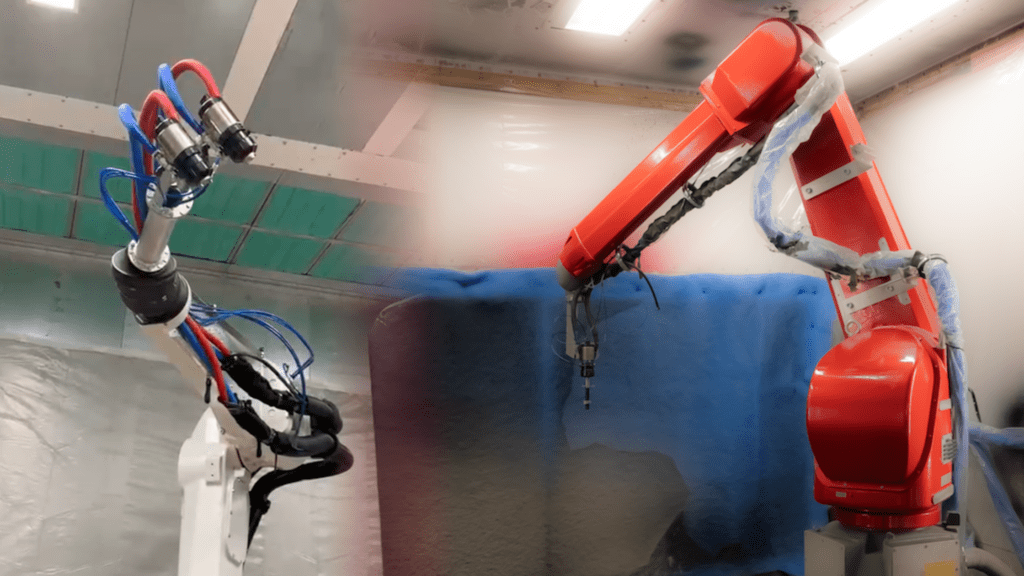
As manufacturers look for ways to increase production, reduce labor dependency, and improve coating consistency, robotic polyurea spraying continues to gain momentum. For the right operation, automation can transform both output and profitability.
Robotic spray systems do far more than replace manual labor. They improve repeatability, reduce waste, support safer working environments, and help manufacturers maintain tighter control over costs per part.
However, robotics is not the right fit for every facility.
The real value comes when production volume, repeatable parts, and coating demands justify the investment. When that happens, robotic polyurea application can deliver a strong long-term return.
Quick Comparison: Manual vs Robotic Polyurea Spraying
| Factor | Manual Spray Application | Robotic Spray Application |
|---|---|---|
| Application Consistency | Depends on operator skill | Highly repeatable and precise |
| Film Build Control | Can vary between operators | Controlled and predictable |
| Material Waste | Higher overspray risk | Reduced overspray and waste |
| Labor Dependency | High | Lower |
| Production Speed | Limited by labor capacity | Higher throughput potential |
| Downtime Risk | Staffing and operator issues | Maintenance-based planning |
| Cost Per Part | Less predictable | More consistent and measurable |
| Worker Exposure | Higher operator exposure | Reduced direct exposure |
| Best Fit | Custom work, low-volume jobs | Repeatable, high-volume production |
Why Manufacturers Are Moving to Robotic Polyurea Spraying
Polyurea is widely used in demanding industrial applications because it dries quickly, delivers excellent durability, and performs well in harsh environments. When paired with robotic application, those benefits become even stronger.
Manufacturers often move toward automation for one simple reason: consistency at scale.
Instead of relying on manual spray variation between operators, robotic systems deliver repeatable application patterns, controlled material usage, and predictable production output.
This matters most in high-volume operations where downtime, rework, and coating failures create expensive problems.
Enhanced Safety and Reduced Operator Exposure
Reducing Contact with Hazardous Materials
Manual spraying exposes operators to chemicals, overspray, and demanding working conditions. While proper PPE and ventilation remain essential, robotics help reduce direct human exposure during the coating process.
As a result, facilities can improve workplace safety while reducing operator fatigue and long-term exposure risks.
This is especially valuable in high-output manufacturing environments where spraying happens continuously across multiple shifts.
Safer systems also support better retention and fewer interruptions caused by staffing shortages or operator turnover.
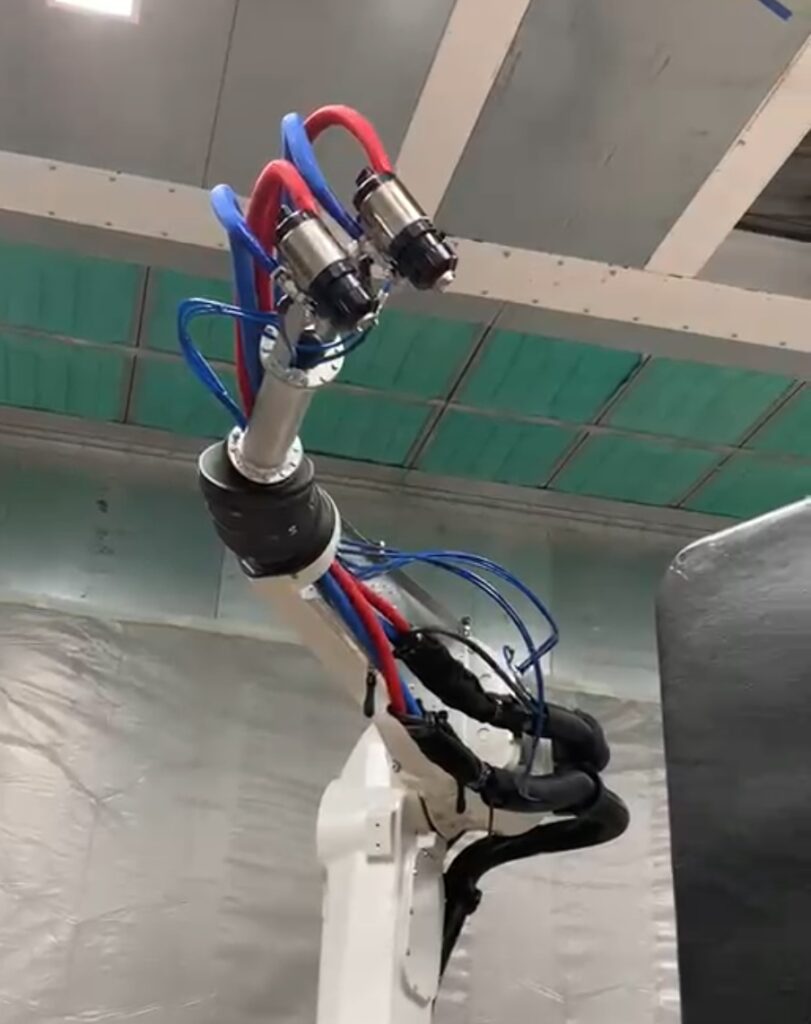
Consistency and Repeatability Every Time
Precision That Manual Application Cannot Match
Even highly skilled spray technicians can create variation between parts. Small differences in distance, overlap, speed, and spray angle affect film build and final performance.
Robotic systems remove that inconsistency.
Each pass follows programmed specifications, which creates:
- uniform film thickness
- repeatable mil build
- reduced overspray
- fewer defects
- stronger quality control
This level of precision also improves Bill of Materials predictability. Manufacturers can better understand exact coating usage per part and forecast production costs with far greater confidence.
Increased Production and Reduced Downtime
Higher Throughput Without Production Bottlenecks
Robotic systems support faster and more predictable production output. They do not rely on shift changes, operator availability, or manual production limitations.
As a result, manufacturers can increase parts per hour and reduce unexpected slowdowns.
That said, robotics work best in repeatable production environments. They still require maintenance, calibration, and fluid system management. Proper planning remains essential.
When installed correctly, however, robotic systems help reduce downtime caused by labor shortages, inconsistent application, and costly rework.
This creates a smoother production line and stronger long-term efficiency.
Lower Cost Per Part
Better Material Control Means Better Margins
Precise application improves transfer efficiency and reduces unnecessary material waste.
Less overspray means:
- lower coating consumption
- fewer rejected parts
- reduced cleanup time
- improved profitability per unit
Labor savings also contribute to lower total cost per part. Manufacturers reduce training costs, staffing pressure, and production delays caused by labor turnover.
The goal is not simply replacing people. It is building a more reliable production system that protects margins and supports growth.
Environmental Performance and VOC Considerations
Efficiency Without Unnecessary Waste
All Ultimate Linings polyurea and polyaspartic systems are formulated with zero VOCs.
This helps manufacturers reduce emissions while improving coating efficiency through better material control and less overspray.
However, VOC discussions do not stop there.
Some projects require primers depending on the substrate and service environment. Certain primers may contain VOCs or solvents, especially when coating concrete, metal, powder-coated surfaces, or difficult substrates.
Because of this, system design matters.
Our technical team works closely with customers to evaluate substrate requirements, adhesion needs, VOC expectations, and overall compliance goals before recommending the right coating system.
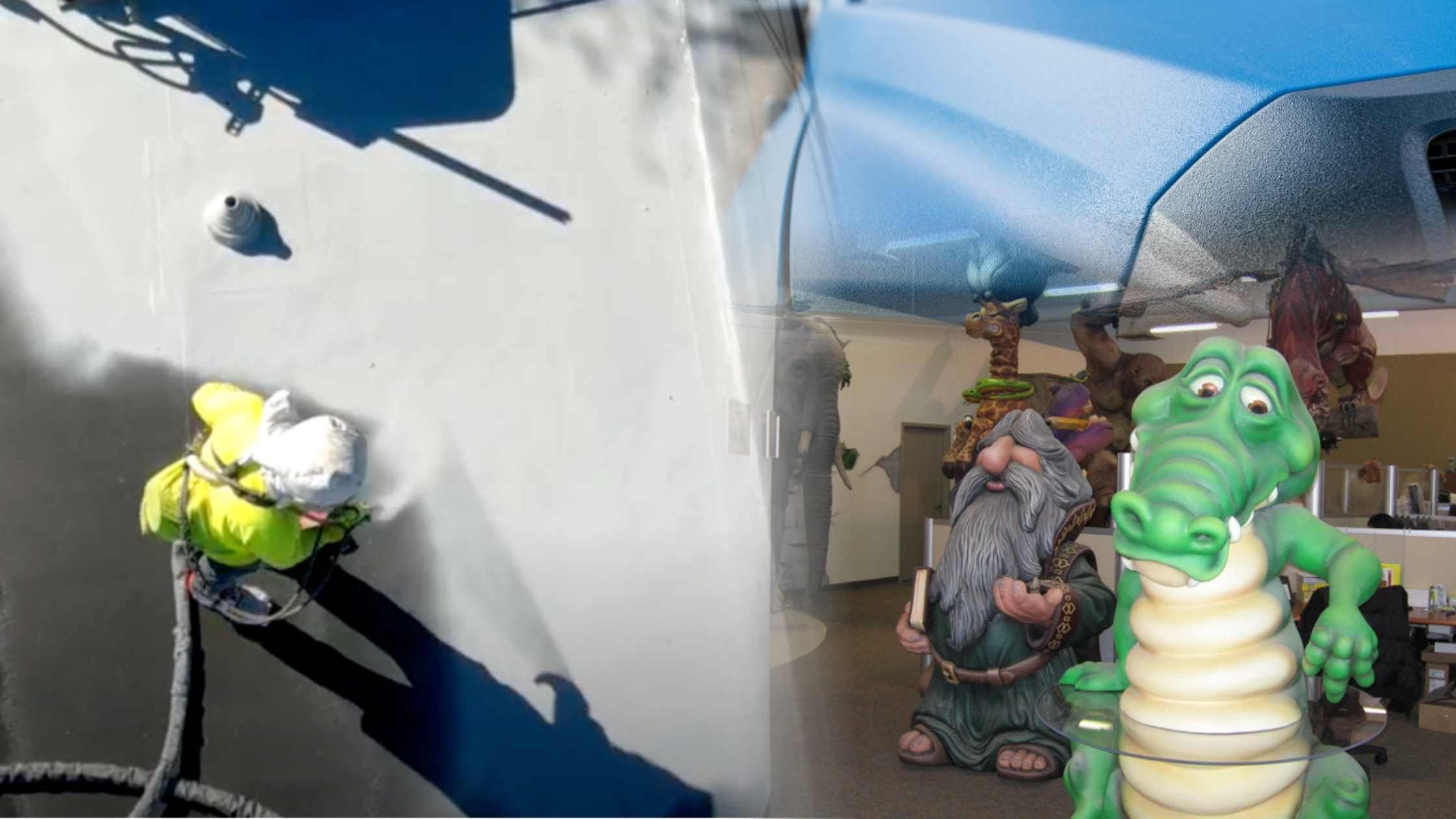
Flexibility Across Multiple Manufacturing Applications
Robotics Are Not Limited to One Industry
Modern robotic spray systems can be programmed for a wide range of part sizes, shapes, and coating requirements.
This flexibility allows manufacturers to support multiple production lines without sacrificing consistency.
Common applications include:
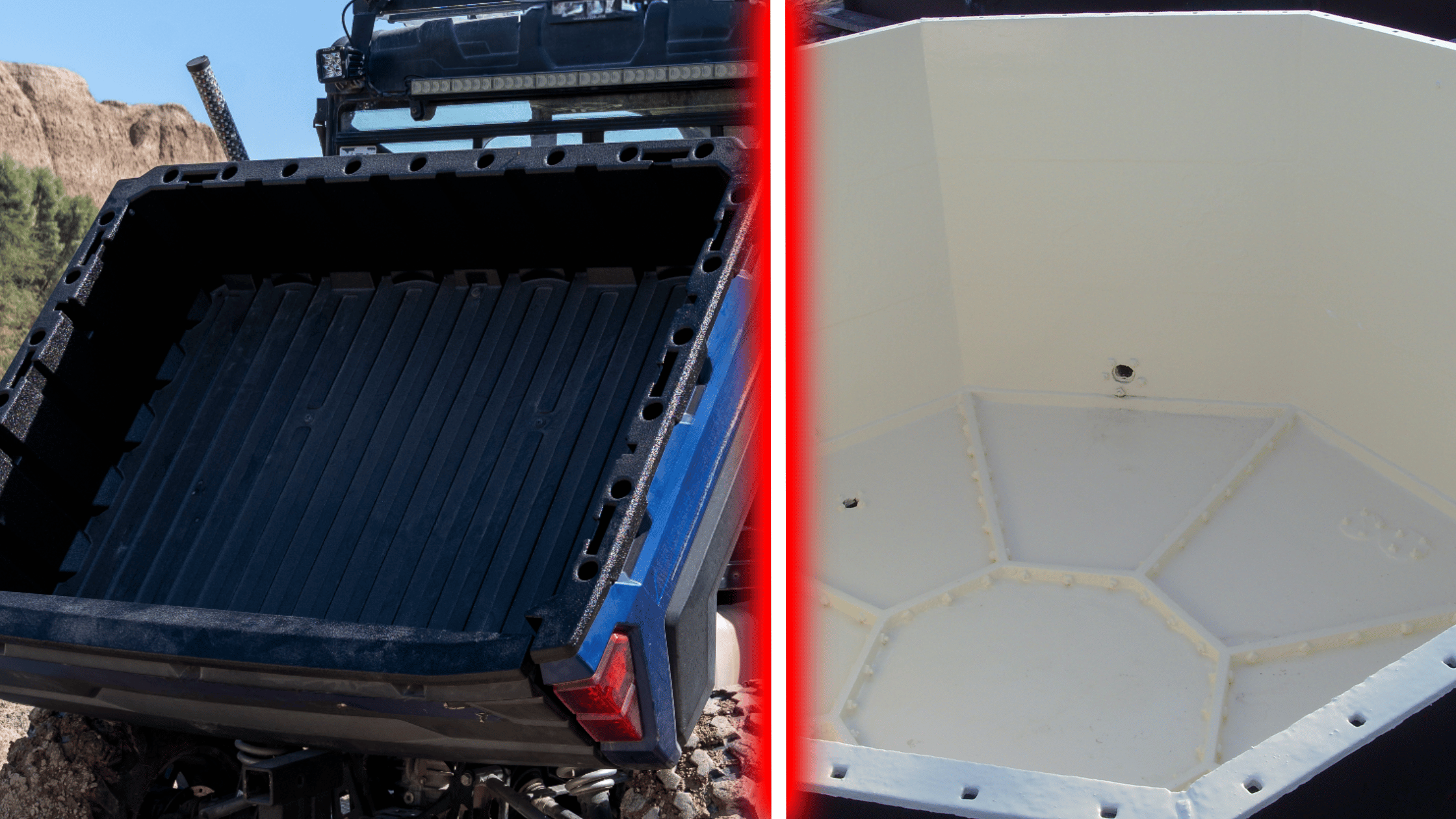
- OEM truck bedliners applied at the point of manufacture
- pallet manufacturing and protective industrial coatings
- large panel linings
- heavy equipment components
- agricultural equipment
- fabricated steel products
- transportation OEM parts
- emergency vehicle compartments
- speaker enclosures
- utility and infrastructure components
For operations with repeatable parts and strict coating requirements, robotics creates a major competitive advantage.
When Robotic Polyurea Spraying Makes the Most Sense
Is Robotics Right for Your Operation?
| If Your Business Has… | Robotics May Be the Right Fit |
|---|---|
| High production volume | Yes |
| Repeatable parts | Yes |
| Tight coating specifications | Yes |
| Expensive downtime | Yes |
| Frequent rework issues | Yes |
| Low-volume custom fabrication | Usually No |
| Constantly changing geometries | Usually No |
Not Every Facility Needs Automation
Robotics delivers the strongest ROI when several conditions are already present.
It makes the most sense when:
- production volume is high
- parts are repeatable
- coating specifications are strict
- labor availability is a challenge
- downtime is expensive
- rework costs are hurting margins
- coating failures create warranty exposure
For highly custom work, low-volume production, or inconsistent geometries, manual spraying may still be the better solution.
The right answer depends on the operation, not the trend.
Ultimate Linings Supports the Full Robotic Polyurea Spraying Process
More Than Materials, Complete System Support
Successful automation requires more than a robot.
It depends on the full fluid delivery system, including:
- pump sizing
- hose routing
- temperature management
- proportioning accuracy
- flow capacity
- equipment selection
- commissioning support
Ultimate Linings works with trusted robotics integrators who design and program the robotic systems, while our team manages the chemical delivery side of the process.
That includes supporting retrofits of existing lines and designing systems for new production capacity.
From chemistry selection to equipment setup and field support, we help manufacturers build coating systems that perform reliably from day one.
Final Thoughts
Robotic polyurea spraying is not simply about automation. It is about creating a safer, faster, and more profitable production process.
For manufacturers handling repeatable high-volume parts, the benefits are clear: better consistency, lower waste, reduced labor dependency, and stronger long-term margins.
When precision and efficiency drive profitability, robotic application becomes a serious advantage.
The best time to evaluate automation is before production problems become expensive.